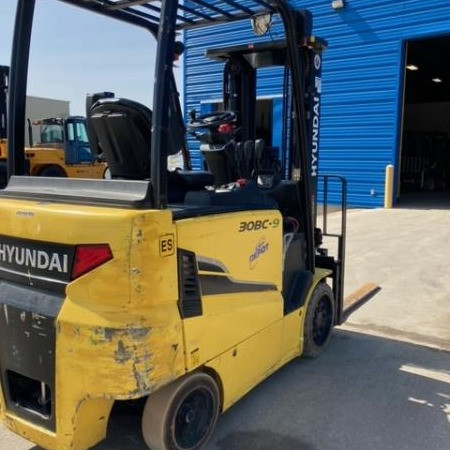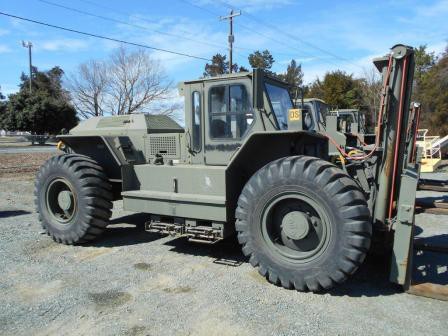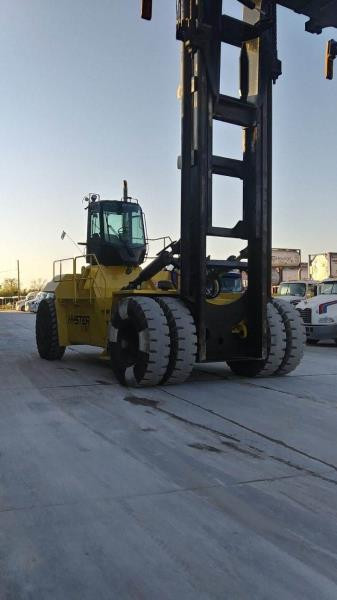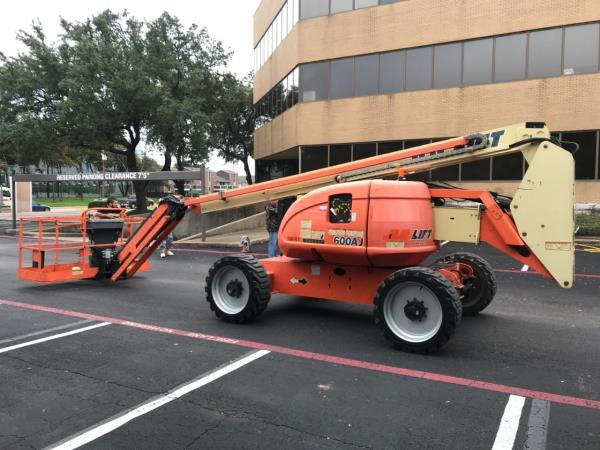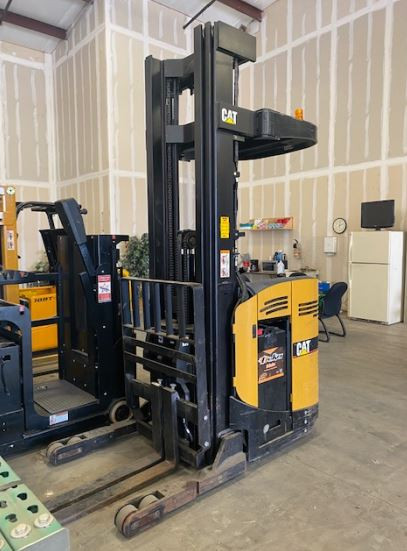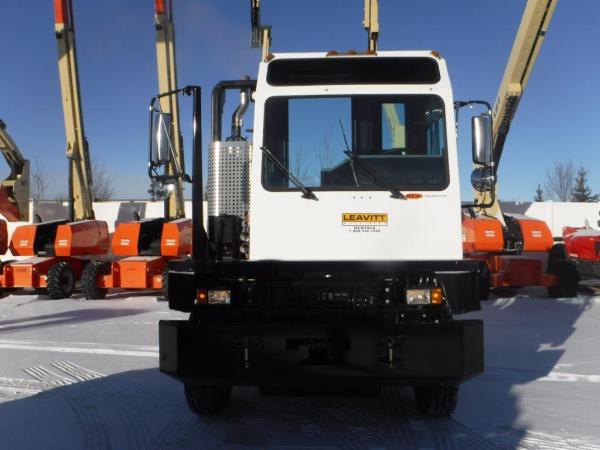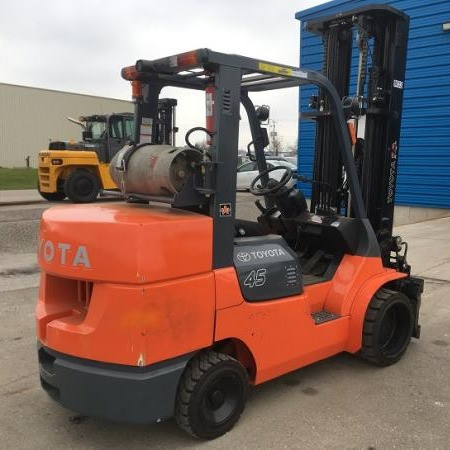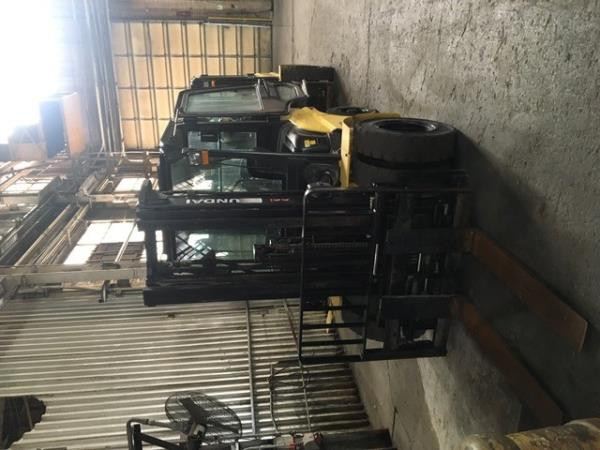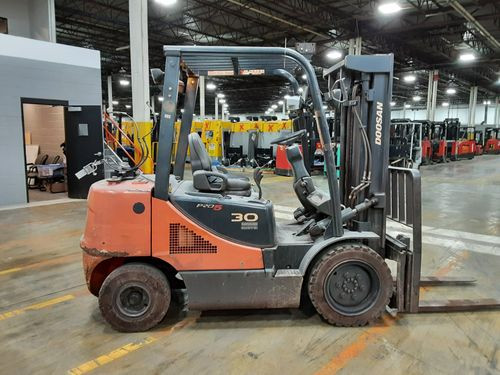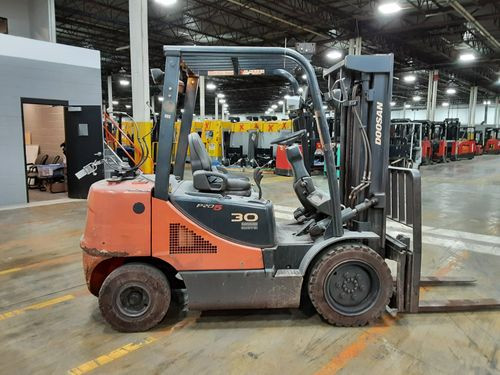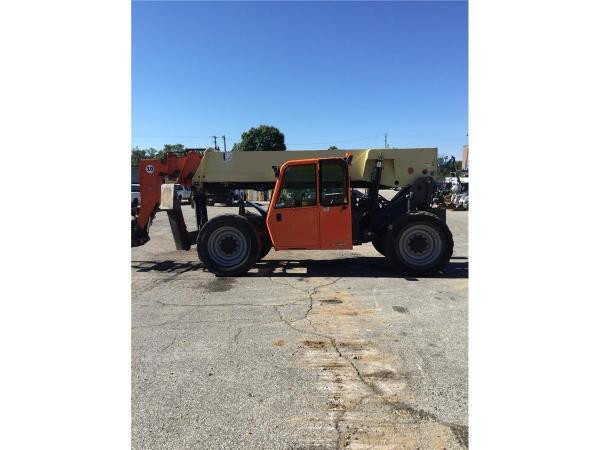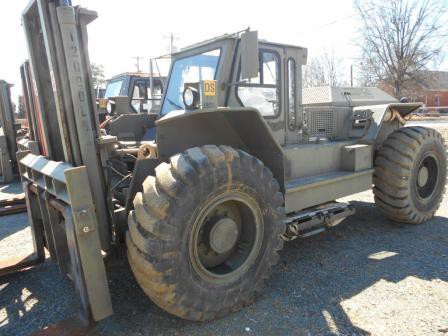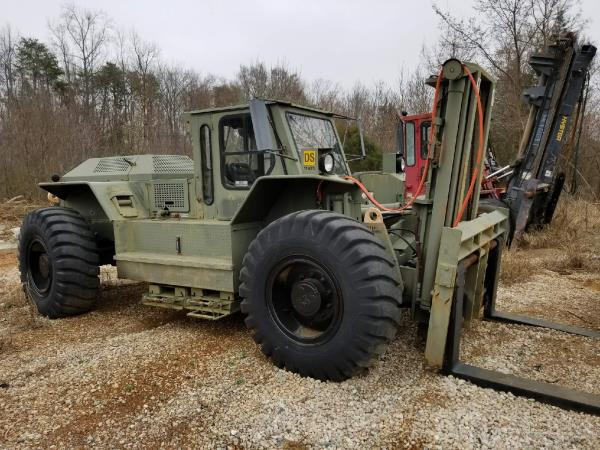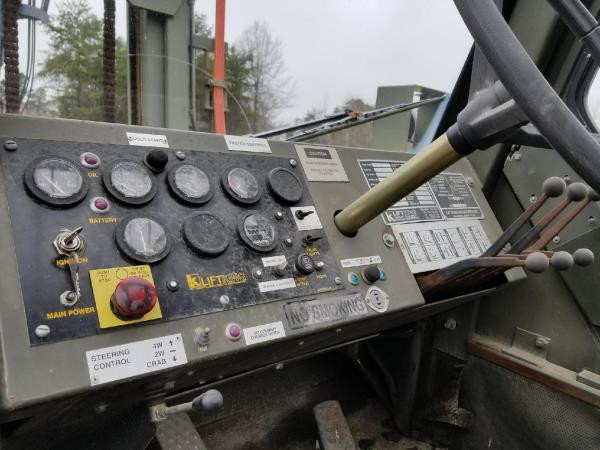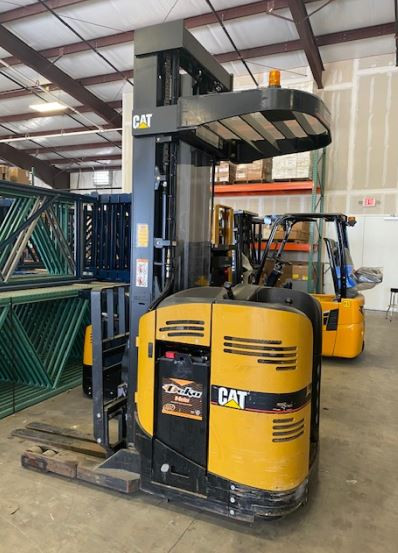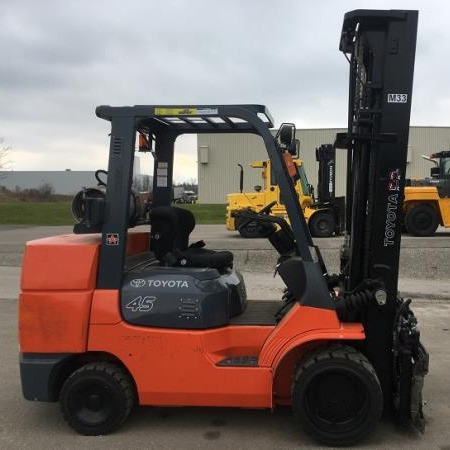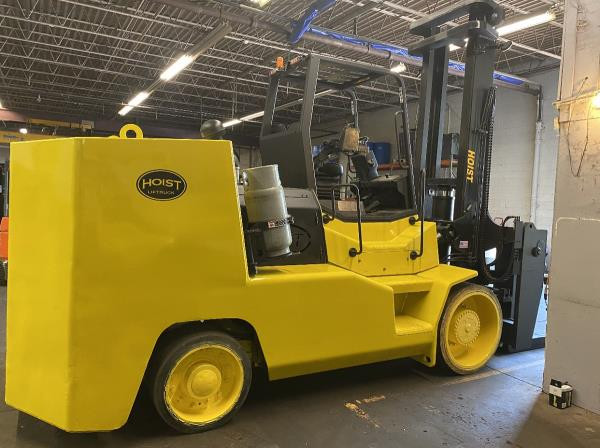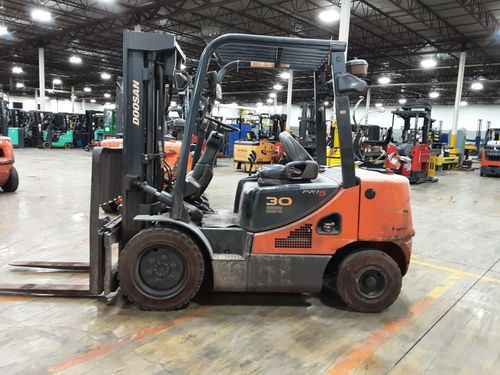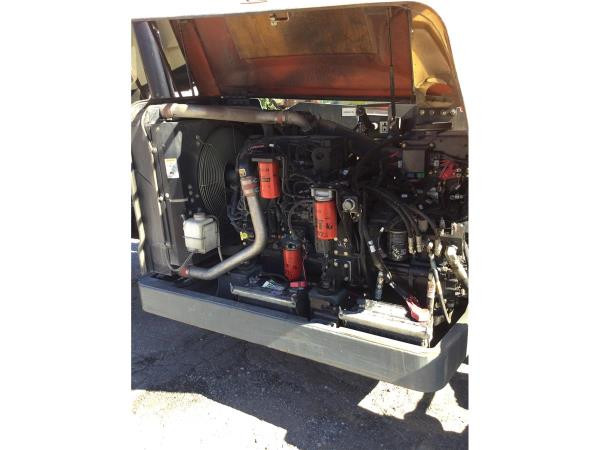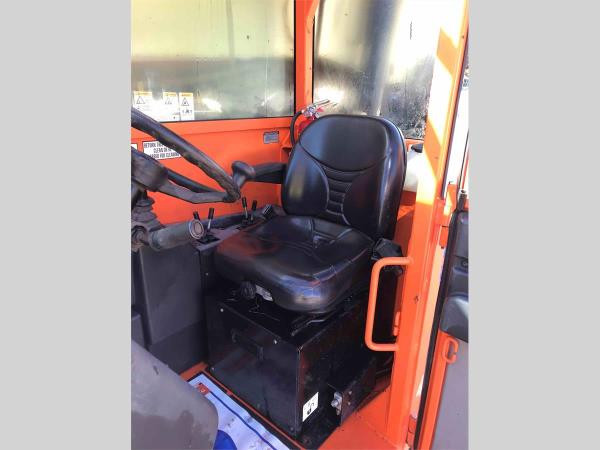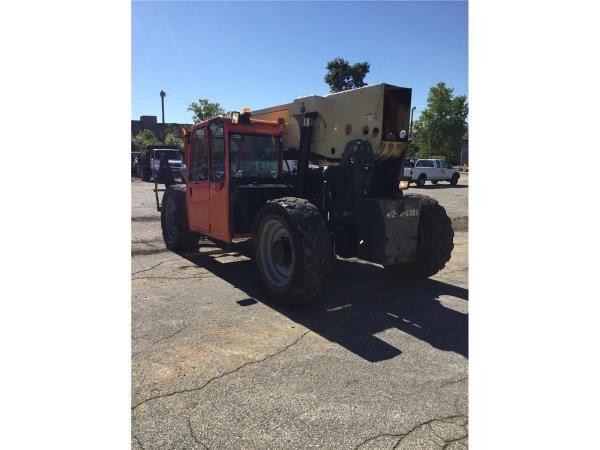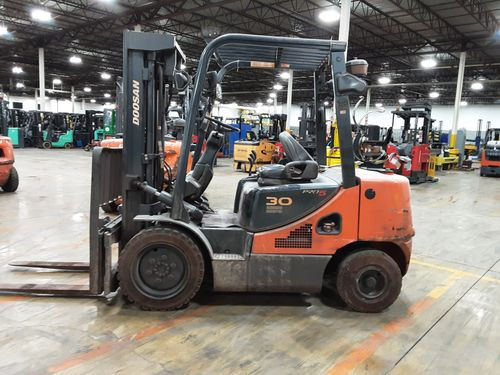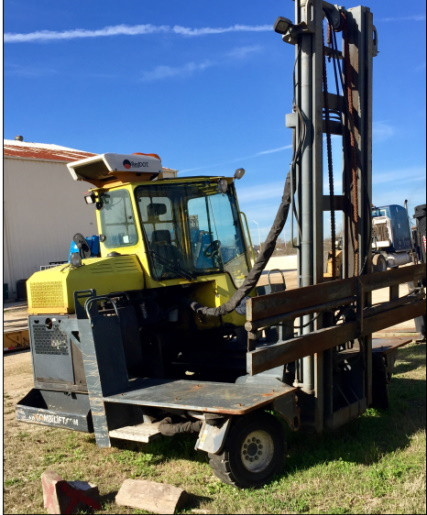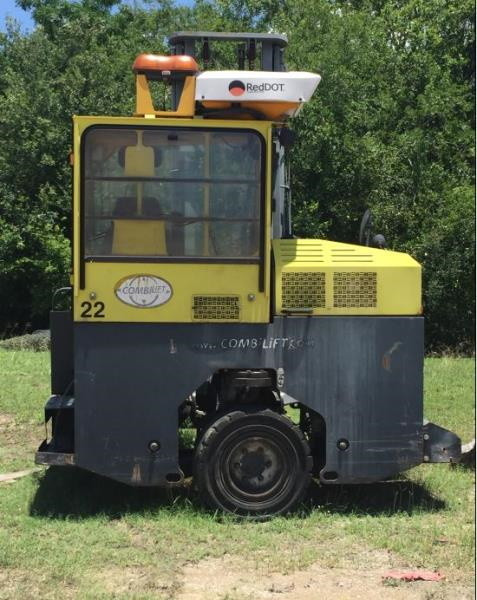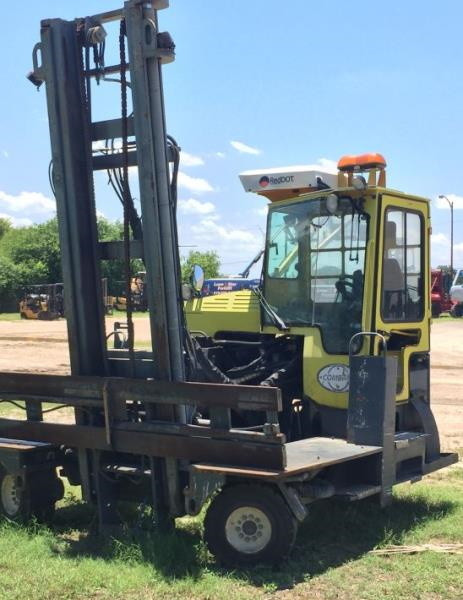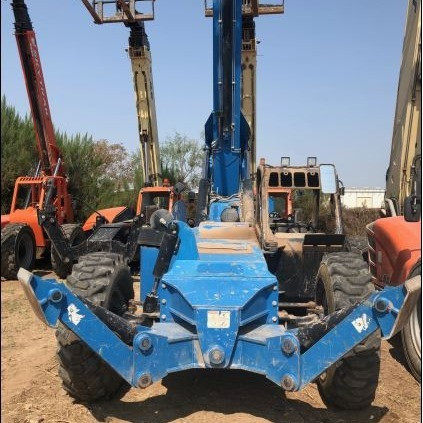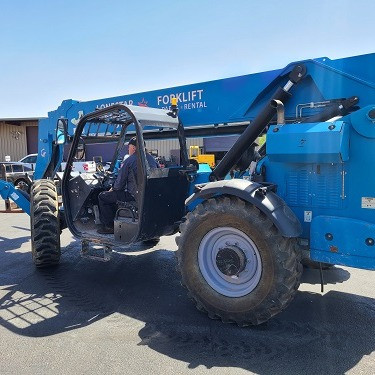

Used Forklifts Spokane - Using both electric and internal combustion (IC) trucks have different disadvantages and advantages. Electric engines cost less to maintain over their lifetime as they require a lot less maintenance. The battery must last five years minimum if the manufacturer's guidelines for maintenance and charging are followed. Overnight charging costs are usually low. Electric trucks tend to be compact units and very maneuverable, especially the types with three wheels. Drive, tilt, lift, auxiliary and acceleration speeds are adaptable and can be changed depending on the driver's preferences and the use. Electric trucks are quiet, and are easier on the environment. Electric trucks are not suitable for use during wet conditions. Because of the need for battery recharging, they cannot be utilized continuously. They are not suited to rough terrain. The energy consumption is high on continuous high lifts and ramp work. Best to be continuously utilized outdoors and on surfaces which are uneven is the advantage of an IC engine diesel/LPG. With no need for battery charging, the forklift could be used during the evening and overnight. Supply and transport of fuel must be factored into costs. Initial expenses are less than for an electric truck, but long term expenses connected to maintenance and fuel are higher. IC engines have larger capacities compared to electric, but less adaptability. LPG could be used in several indoor applications. IC Engine diesel/LPG makes higher emissions and more noise compared to electric. LPG has lower emissions compared to diesel. Telescopic handlers are somewhat similar to forklifts. It has one telescopic boom which extends both forwards and upwards from the truck, and a counterweight located within the rear. It functions more like a crane than a forklift. The boom could be outfitted with different kinds of attachments. The most popular attachment is pallet forks, but the operator can also attach a muck grab, lift table or bucket. Also called a telehandler, this kind of equipment is usually utilized in industry and agriculture. A telehandler is most frequently used to move loads to and from places which will be hard for a standard forklift to access. Telehandlers are usually used to unload pallets from in a trailer. They are also more handy than a crane for lifting loads onto rooftops and other high locations. The telehandler has one major limitation. Despite counterweights at the rear, the weight-bearing boom can cause the vehicle to destabilize when it extends. Hence, the lifting capacity lessens when the distance between the front of the wheels and the centre of the load increases. The Matbro company developed telehandlers in England. Their design was based on articulated cross country forklifts used in forestry. Initial models consisted of a centrally mounted boom on the front and a driver's cab on the rear section, but today the most popular design has a strong chassis with a rear mounted boom and side cab. Hyster is globally known as an industry leader in the forklift producing business. However, it began as a manufacturer of lifting machinery and winches. Most of its production was focused in the northwest United States and dealt mostly with the timber and logging industry. A couple years after the 1st forklift trucks were invented Hyster became synonymous with quality manufacturing. Over the preceding 80 years Hyster has continued to expand and grow its product line. The growth of its products coupled with its want to stay service oriented has allowed Hyster to develop into the worldwide player it is in the present day. Since 1992, Toyota Material Handling inc., U.S.A., often known as TMHU, has been the top selling lift truck supplier in the United States. This company has been situated out of Irvine, California for well over 40 years, providing a complete line of quality lift trucks. With a first-rate reputation of resilience and reliability, Toyota lift trucks have thrived in the competitive materials handling market. Quality is the cornerstone of Toyota’s notorious Toyota Production System practiced at all manufacturing facilities, including TIEM, which is stands for Toyota Industrial Equipment Manufacturing, situated in Columbus, Indiana. The majority of the Toyota lift trucks sold in the U.S.A are manufactured here. All Toyota's manufacturing facilities within Canada and the United States comply with the International Organization for Standardization or ISO 14001 standard. The Columbus TIEM plant has been honored on many occasions for its dedication to relentless development and its environmentally friendly systems. It is the first and only producer to offer EPA and CARB-certified Compressed Natural Gas powered lift trucks on the market. For instance, the Toyota 8-Series IC lift trucks emit 70 percent fewer smog forming emissions than the current federal EPA standards and have complied with California’s strict emission standards and regulations. Jungheinrich is now among the top suppliers of lift trucks, material flow technology and warehouse technology all around the world. They are Number 1 within Europe for system technology. The business offers a complete product assortment of rack systems and material handling equipment and services from a manufacturing logistics service provider. Jungheinrich is the 3rd biggest supplier of forklift trucks used for the materials handling business. They realized their incredible growth due mostly to their quality lift truck designs and innovative technology. They have developed a host of productivity and ergonomic improvements for their fleet and introduced a proprietary 3-phase AC motor and controller technology. Jungheinrich has over 300 service and dealer facilities strategically situated all around Canada, the USA and Mexico. Among the companies main objective is to simplify their customers material handling requirements by offering customized solutions. Jungheinrich manufactures many forklifts in their line of products, lift trucks which are intended to work remarkably in various applications. These equipment are well-suited to accomplish tasks in a diverse environment. They can complete food processing, order picking, warehousing and stacking applications with ease.
Potain: Used Potain Construction Cranes Spokane - Potain is a global leader in the industry of construction cranes. This is a particular brand that belongs to Manitowoc. They specify in offering cranes for the building construction industry. Some of the varieties and service news regarding Potain cranes consist of: crane operators training programs, tower cranes, building site reference, second-hand cranes, and crane equipment innovations, amongst numerous other things. There are so many different realities within today's global marketplace; the customers these days no longer accept any "one-size-fits-all-solutions" to suit their requirements. Manitowoc is committed to assisting all their clients meet all their really specific and diverse requirements. The company is completely structured to be able to meet the diversified needs for various regions and tasks in order to serve their broad client base. A huge variety of equipments like Grove mobile hydraulic cranes, Manitowoc-lattice boom crawler cranes, National Crane telescoping cranes and Potain tower cranes are services, sold and manufactured at a lot of locations on 5 different continents. Just about all Manitowoc products are built and manufactured as modular base models in order to maximize value and functionality. These units all have the capacity for add-on parts which could help the equipment maximize its performance. Lastly, each and every product has been engineered with features that suit the requirements of different regions. Like for instance, they offer simplicity, in addition to dependable and efficient performance in the most challenging settings as well as suit the needs of transportation policies all over the world. Manitowoc Finance provides many reasonable financing alternatives for their clients, which helps their clients facilitate securing the best type of equipment, and enables the company to tackle lucrative new opportunities when they arise. In addition, as soon as their customers are in the field, Manitowoc's Crane Care provides complete service packages. They are available to help and have professional repair and diagnosis available at your side. All maintenance is completed by qualified local representatives who speak the native tongue of where help is being called from. These professionals have the ability and knowledge to return your machine to lucrative operation with a short amount of downtime.
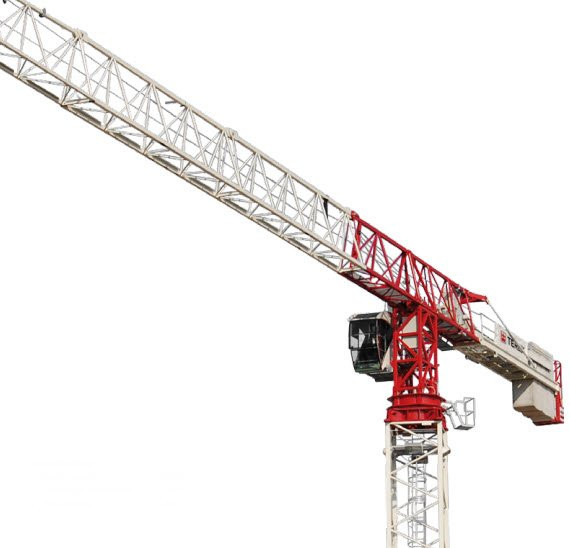
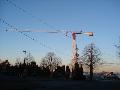
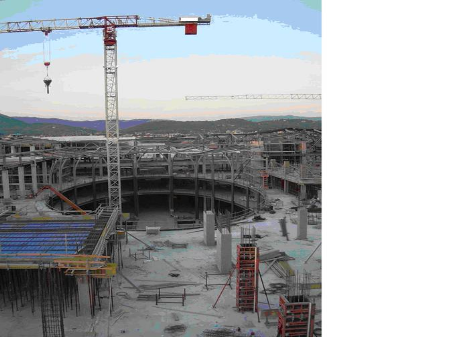
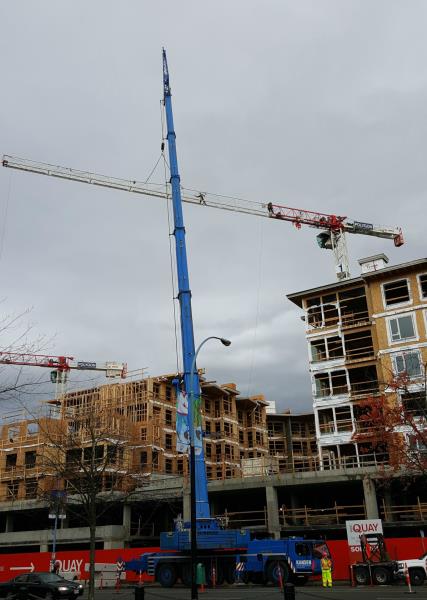
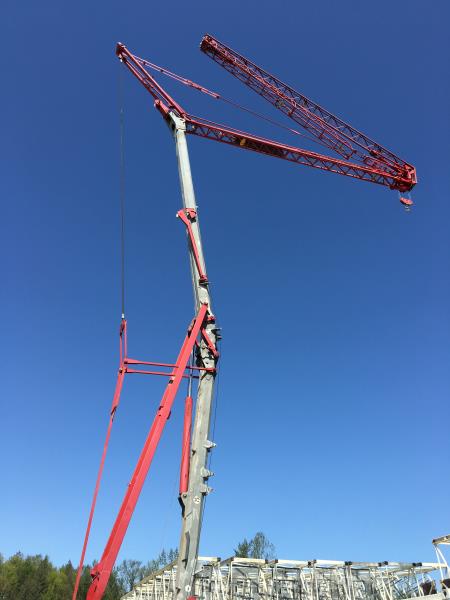
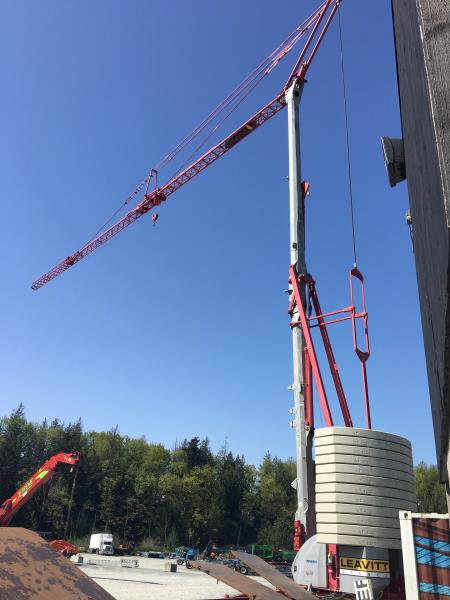
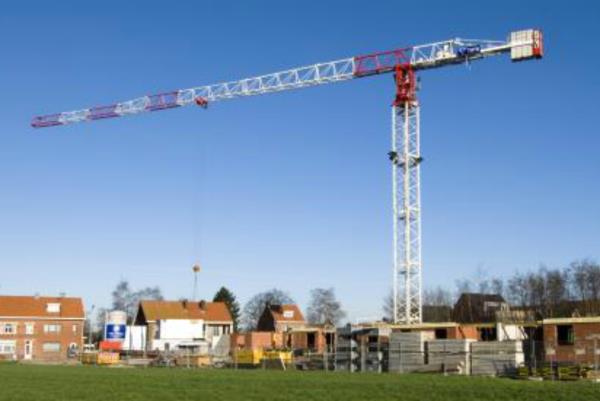
Pecco: Used Pecco Cranes Spokane - Parts of a Tower Crane Some of the most amazing structures throughout the globe are made utilizing cranes. The newer cranes are designed to be able to reach higher heights. Tower cranes offer the way to lift and move tools, building parts and supplies all over a construction site. There are a few different parts which assemble a tower crane when they are put together. Putting a tower crane together uses different pieces of construction machines. Base The tower crane base is normally made from a steel unit. The units' base connects to a custom pad made of concrete. This type of set-up provides the structure with stability. Overall, the construction has to be engineered and built well so as to operate at optimum safety. Mast The mast of the tower crane provides height to the machinery. The mast is made of connected steel sections. The amount of sections determines the crane's height. Usually, a tower crane has a design which allows the mast to grow during construction by adding more sections as the building process continues. This way the crane's height could be specified, ensuring it has sufficient height to perform the needed work safely and efficiently. Slewing Unit/Top Climber A slewing unit is situated above the mast. This unit houses the machinery and the motor which enables the crane to rotate. A top climber is the piece of machine that enables the mast to grow. The top climber is situated just underneath the slewing unit. Hydraulic rams in the top climber enable the slewing unit to be detached from the mast by raising it higher. Boom The term "boom", refers to the working arm of a tower crane. The boom is made up of separate steel sections that are connected together, extending out from the top of the slewing unit and parallel to the ground. There is a trolley connected to the base that could run the length of the boom. This trolley holds the hoisting device.
Jungheinrich: Used Jungheinrich Lifts Spokane - The material handling corporation Jungheinrich produces and offers over 600 different machinery varying from forklifts, pallet trucks and order pickers. We offer a wide array of solutions for any application regardless of lifting height, type of surface or transport distance. For more info, click on the product group relevant to your particular needs. The Jungheinrich range of hand pallet trucks runs from traditional, 2,200 kilogram payload hand pallet trucks to scissor pallet trucks. These types of trucks come in full or partial stainless steel or galvanized variants. Whatever your particular needs, we can offer a solution which is cost-effective. Jungheinrich pallet trucks come in units made for different transport distance needs. Pedestrian trucks are great for short distance transport needs. For medium-range needs, we provide combined pedestrian/stand-on machinery. For longer distances, the stand-on/seat truck is really an excellent choice. Payload capacities range from 1,600 kg to 3,500 kg. You will certainly find the most economical solution for your operations. Jungheinrich offers customized stacking solutions for any lifting height. Heights may reach up to 5,350 mm and payload capacities of 1,600 kilograms to 3,000 kg. For short distances, pedestrian trucks are ideal, while for both longer and medium distances, we suggest the combined pedestrian/stand-on stacker or the stand-on/seat truck. With such a wide array of choices, you are certain to find the best solution for your lifting requirements. Looking for solutions for indoor and combined outdoor/indoor applications? Jungheinrich offers electric counterbalance trucks with payload capacities varying from 1,600 kg to 5,000 kg in the following variants: the high-traction Series 2 EFG, the compact, rear-wheel drive Series 1 EFG and the Series 5, 4 and 3 four-wheeled lift trucks.
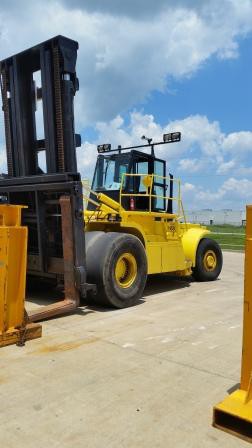
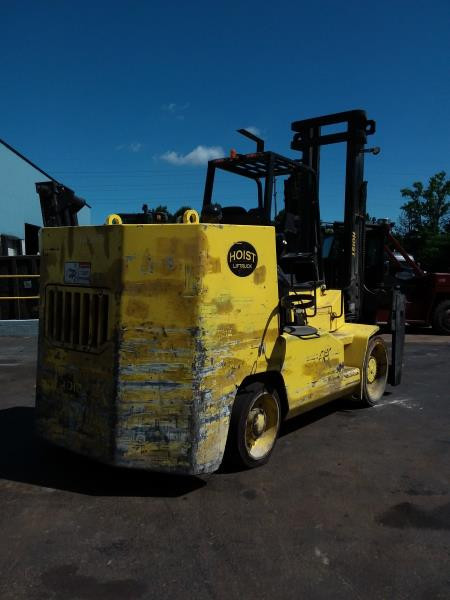
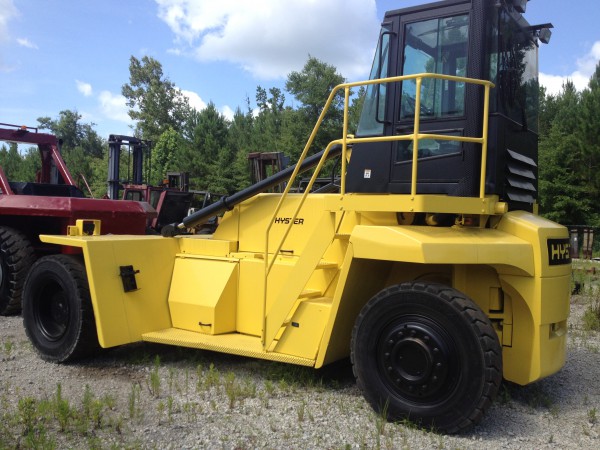
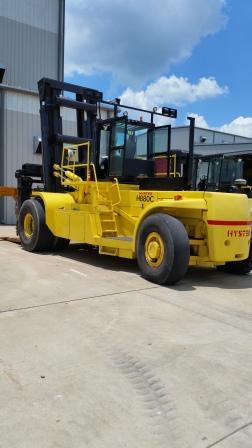
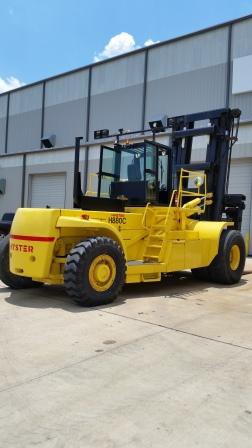
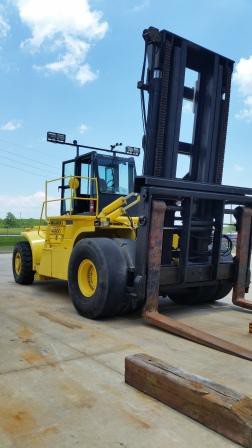
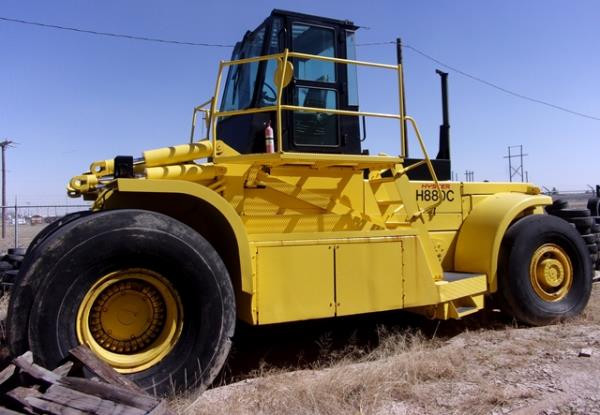
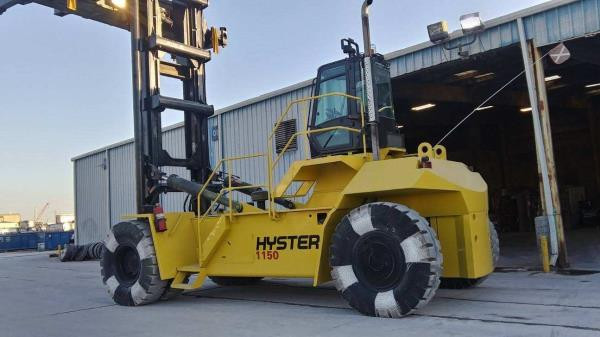
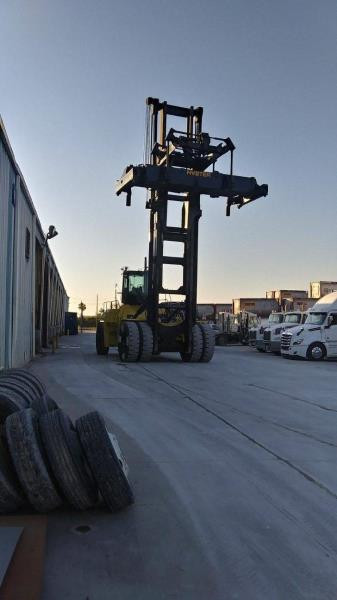
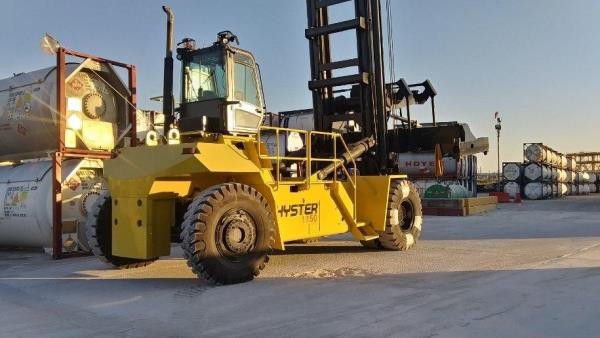
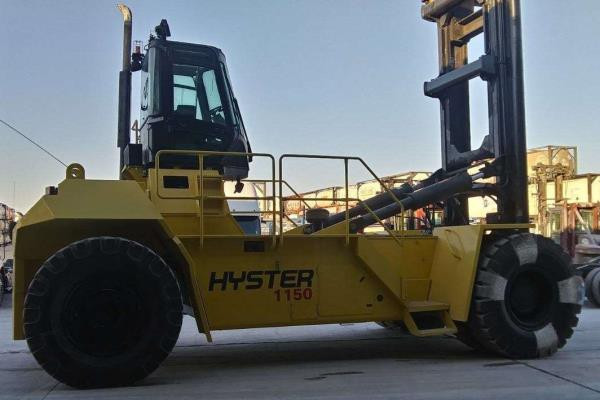
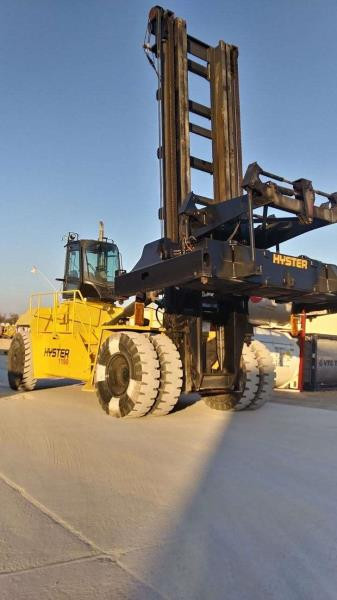
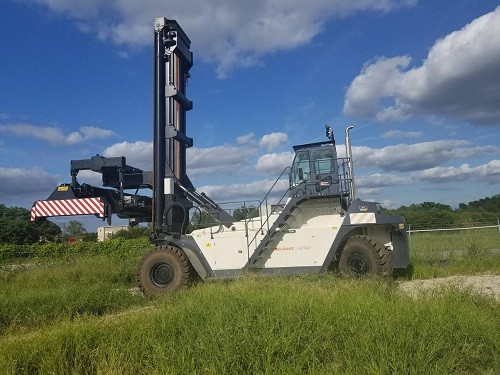
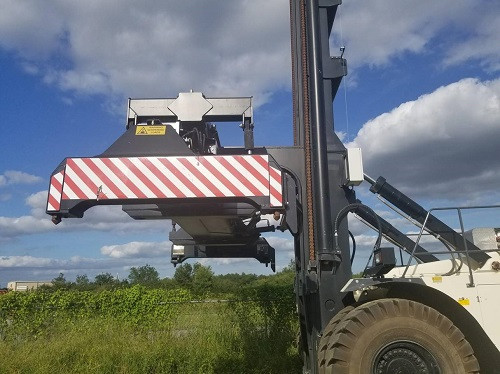
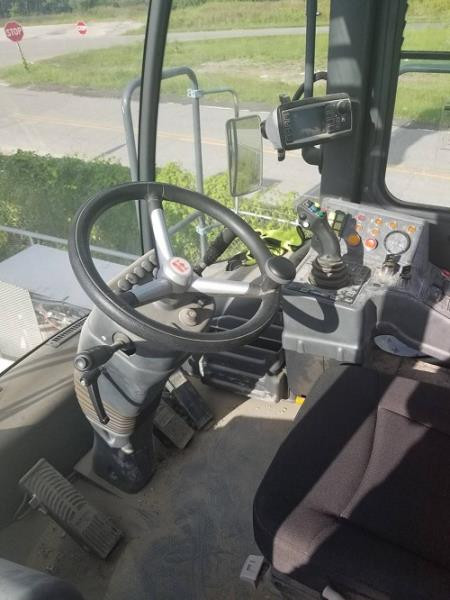
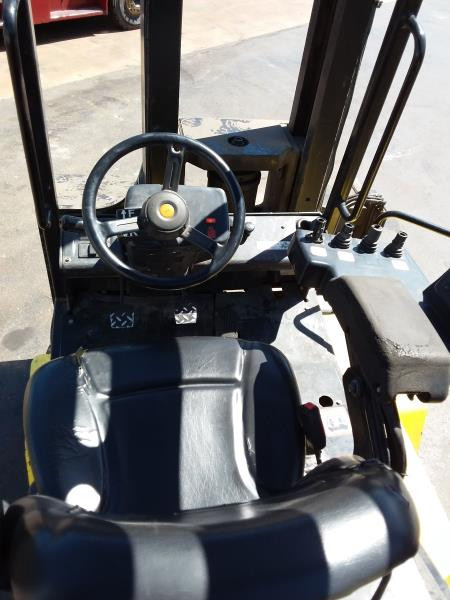
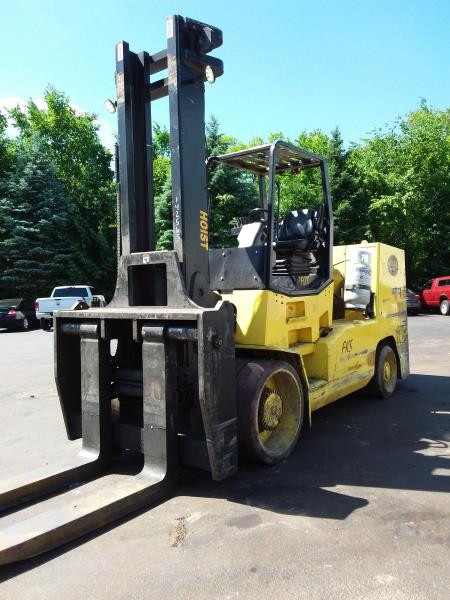
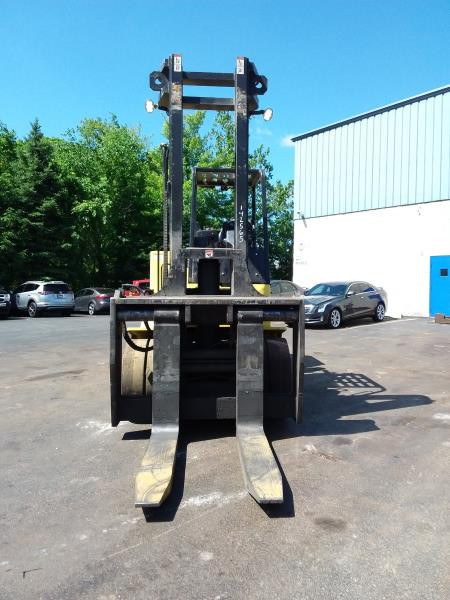
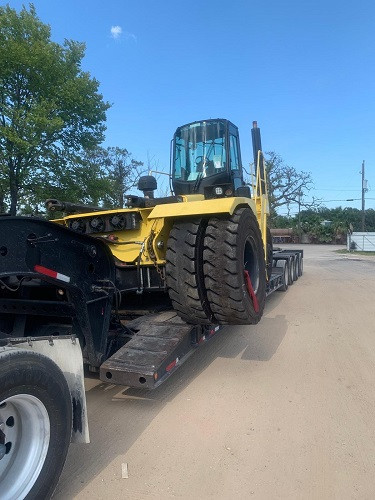
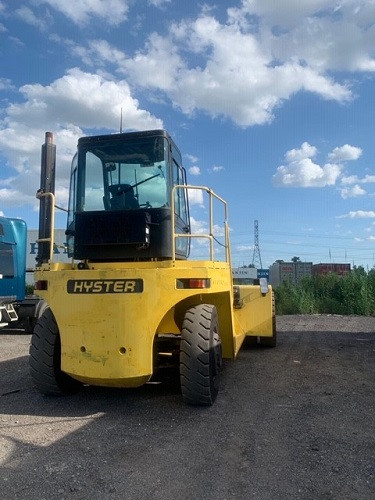
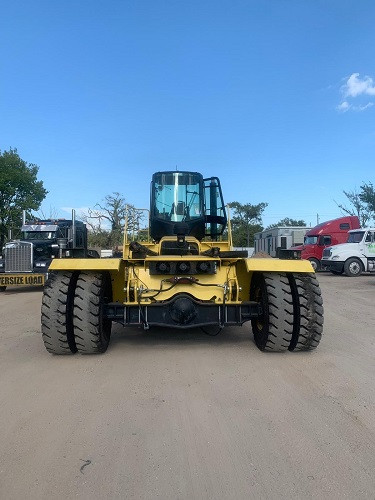
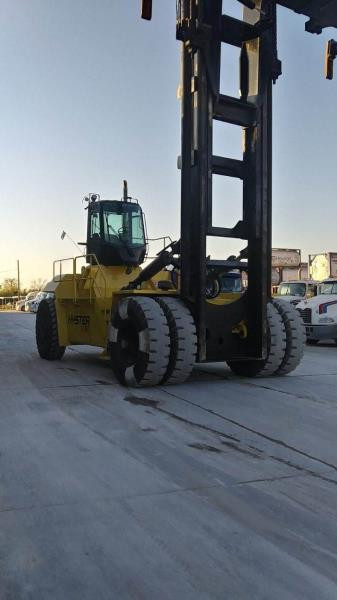
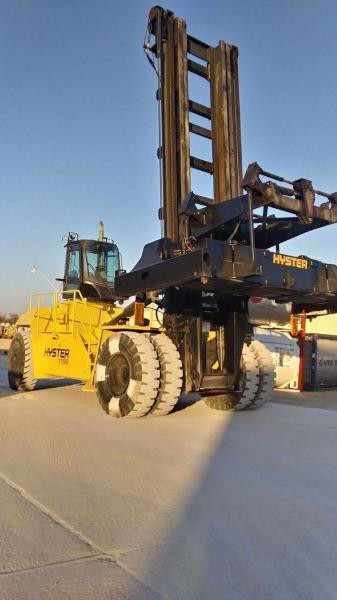
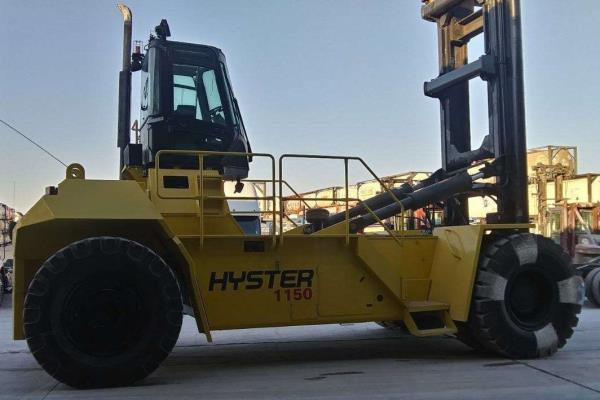
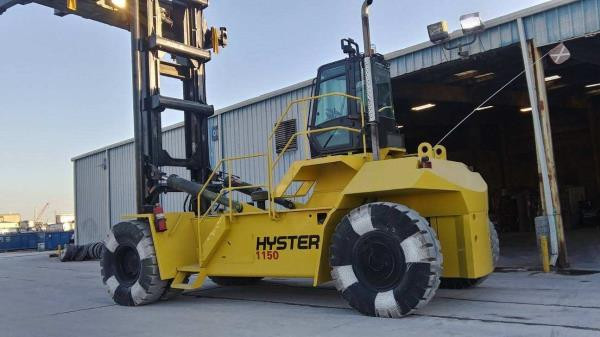
Hyster: Used Hyster High Capacity Forklift Spokane - Hyster's high capacity model forklifts come equipped with diesel Cummins engines, a unique rear light cluster which includes turn signals, brake and back-up lights, as well as hydrostatic load sense steering. This unit is also equipped with wet disk brakes, open operator cab, a 3-speed powershift transmission and VISTA mast. This empty container handler is agile and offers you the maneuverability, reliability and durability in order for you to be able to easily and successfully handle your toughest duty-cycle. The manual tilting cab and gas-spring gull wing doors make access to more than 95% of the serviceable items easy and quick. The H360HD2-EC4 offers an excellent balance in overall unmatched performance, unsurpassed serviceability and total operator comfort. The H190-360HD2 series offered by Hyster is the definition of excellence from start to finish. This unit offers the ComforCab II operator compartment with hydraulic controls, load sensing power steering and uncluttered floor design. The exclusive Vista Mast offers unparalleled visibility for the operator. Utmost attention to detail in the ergonomics department is put into each of these machines. The excellence and reliability are all designed to help increase operator output. Side tilting capabilities also come equipped with the ComforCab II models. The engine, transmission in addition to other service check points are conveniently located to allow quick maintenance. This attention in the design allows daily service checks the ability to be completed in less than 10 minutes. This equates to a lesser organization expense to your company. Hyster showcases their exclusive Vista masts. These masts are comprised of an overhead guard and widely spaced channels to provide you with the best all-around visibility for more effective load handling. The equipment's diagnostics part has also been simplified by introducing a top-of-the-line multi-function display panel. This panel provides at-a-glance information with 16 warning lights, a dual function LCD and 5 gauges. Hyster is known worldwide for being devoted to providing their customers with an excellent family of material handling machines. These machinery are built with the operator's safety and comfort in mind. They have proven to be dependable and reliable in even the most difficult conditions. Hyster remains innovative and consistent in their equipment designs. These kinds of equipment are made to last and get the task done efficiently and effectively. These are just some of the reasons that the Hyster Company has become one of the leaders within the business.
TCM: Used TCM Lifts Spokane - There are two basic types of lift trucks, those that run on gas and units which run on electricity: IC or Internal Combustion Forklifts: The IC lift truck will run on fuels such as gas, liquid propane, diesel or compressed natural gas or CNG. Gas powered units are great for outdoor applications as they release pollutants and gases which are harmful to employees and pedestrians. Gas units are also great for use in bad weather and in the rain. These models could carry weights around 15,000 to 35,000 pounds. Due to the maintenance and fuel costs, models which run on gas are a lot more expensive to utilize than units that run on electricity, although, they cost a lot less up front compared to the electric models. Units that run on liquid propane are the right choice to be utilized indoors. Electric Forklifts: The electric lift truck units are powered by very large batteries which must be recharged. The machines do not create any polluting air emissions like these units do not burn any fuel. They are the right alternative for indoor use and warehouses. What's more, electric forklifts do not require any fuel storage units and they are a lot quieter to run compared to other models. Amongst the downsides of electric powered units is that they can not lift loads over 15,000 pounds and thus, have a slower acceleration than gasoline powered units. Lift trucks are specifically made to easily and quickly transport heavy cargo with simplicity. Like the case with most kinds of vehicle, unfortunately, lift truck accidents do occur frequently. There are specific safety rules which must be followed to be able to keep everybody safe. The most vital issue is recruiting a qualified operator, who will be able to show you a valid forklift license. There are numerous different styles of forklifts available on the market. Choosing which one is right for your particular needs will be based on the type of environment your machinery would need to operate in, for example, indoors or outdoors or both and what types of loads that you have to transport. Once you know your particular needs, it would be really easy to match up to the right type of forklift. When you understand your needs precisely you can make the best decision. One more great way to get first hand experience on the various forklift units is the try leasing your lift truck. This will also allow you to see all the possible choices available to you. This is a less expensive way to know if the equipment you have in mind could keep up with you on the job location.
Komatsu: Used Komatsu Warehouse Forklifts Spokane - Warehouse Forklift Maintenance Having a proper maintenance program for forklifts would help to increase the lifespan of the machine and is also a vital factor to the safe use of the machinery. Completing forklift inspection regularly and performing preventive maintenance regularly will help to guarantee the safe and efficient use of the machine. Daily Checklist In any forklift maintenance program, the daily checklist is an invaluable tool to have. These checklists will document any potential problems. They are required by the Occupational Safety and Health Administration or the OSHA. The daily checklists could also be audited by OSHA during any routine inspection. Operators are required to complete the inspection from the start of their shift. If any major problems are found, the forklift is not to be put into service until the issue has been fixed. Maintenance and Safety Go Hand-in-Hand In the US, there are roughly 100 deaths related to forklift mishaps and statistic show that almost 20,000 individuals are seriously injured too. This number translates to represent 54 individuals per day, 7 days a week, for the whole year. Many of these mishaps can be prevented easily if the forklift had been correctly maintained and serviced. In several circumstances, it may seem like a cost savings to delay or skip regular maintenance, however, these savings would pale in comparison to the cost of one accident. Things to be Serviced The manufacturers owner guidebook will include a recommended maintenance schedule. Schedules will vary depending on each manufacturer and each model of forklift. Each schedule would contain various basic things. Like for instance, in a combustion engine, the oil filters and the engine oil must be replaced periodically. Hydraulic levels should be inspected too. Be certain to check hoses for any signs of cracking. Other things involve the electrical systems, the brakes and the transmission of the forklift.
Toyota: Used Toyota Dual Fuel Forklift Spokane - Sakichi Toyoda was the first founder of the Toyota Industries Corporation or also referred to as TICO during 1926. TICO has expanded the scope of its business domains since the companies beginning to promote diversification, like logistic solutions, material handling machines, textile machinery and equipment, electronics, engines, vehicles, car air-conditioning compressors and automobiles. About Toyota Material Handling, U.S.A. Inc. The TMHU has ever since the year 2002, been the supplier for North America's top selling forklift. In addition to the wide array of high-quality forklifts sold under the brand name Toyota, the company has extended their industrial machinery solutions to consist of tow tractors and Automated Guided Vehicles. TMHU is celebrating its 45th year in business within North America. Excellence is the hallmark of the Toyota Production System. It is practiced at each and every Toyota manufacturing facilities including TIEM. During 2011, Industry Weekly magazine named TIEM a North American Best Plant. TIEM is a member of the National Safety Council and follows the ISO 14001 standard set by the International Organization for Standardization. Ever since it opened during the year 1990, TIEM has manufactured over four hundred thousand Toyota lift trucks. Toyota is internationally known for being committed to excellence in client service. This dedication has been extended all around Spokane and the United States. There are more than seventy authorized Toyota Industrial Equipment dealers and throughout North America there are over 220 dealership locations. Toyota dealers are well skilled and can offer comprehensive support and client service. They offer one-stop shopping for both brand new and used lift trucks, fleet servicing, rentals, service and parts and financing. Toyota remains committed to providing excellent quality care. They can ship replacement parts on short notice and hope to lessen any possible downtime. Toyota dealers are happy to deal with any issues or questions set forth by their clients and are also a great resource if you are thinking of becoming a potential client and have to determine the right kind of equipment for your specific needs. The dealerships offer a wide array of used, new and refurbished machines in order to provide you with the right choices. Renting equipment is a great way to try before purchasing. This way you can check the machine within the environment you would be using it in to determine if it will be sufficient and suitable. On their business website, Toyota provides plenty of information. Visit your local dealership to have any questions answered, see the latest machine and experience their product line first hand.
Nissan: Used Nissan Dual Fuel Forklifts Spokane - The IC or internal combustion lift trucks are used most commonly for indoor applications like trucking, manufacturing, bottling and warehousing. Normally, these models use solid rubber tires known as cushion tires. The IC forklift models can be powered either by diesel, Liquid Petroleum Gas or LPG or Dual fuel. The dual fuel units work with both LPG or Liquid Petroleum Gas and gasoline. These machinery could operate on either fuel but not at the same time. IC or Internal Combustion engines are Class 4 lift trucks. The engine is responsible for powering the hydraulics, the truck and all functions of the truck. Nissan's forklift Platinum II units and the GO4 Series have lifting capacities from 3000 to 11,000 lbs. They come in models powered by dual-fuel or LPG/gasoline or LPG engines. The CARB certification on these specific engines gives them the confidence to help protect the environment since it enables the forklifts to generate low emissions. The environmental certifications such as CARB, help many employers offer their workers cleaner and thus safer working atmosphere. Nissan's fuel management systems like the LP/Gas combinations offer optimal engine operation that would help to reduce exhaust emissions and provide incredible fuel economy at the same time. Every Platinum II fork truck is standard outfitted with their compressive engine protection system in place to warn operators in the event of excessive heat or a severe drop in oil pressure. This system helps to extend your engine and drive train life to help keep your lift truck investment working at its optimum ability. The dual fuel units are making a splash within the industry since numerous companies are trying to be as "green" as possible and as environmentally efficient and friendly as they could. It's also a good idea to lease the equipment for a while to see if you like the way it handles before making a big investment. There are a lot of different options in the business today and with some research, you can choose the best model for your particular operation.
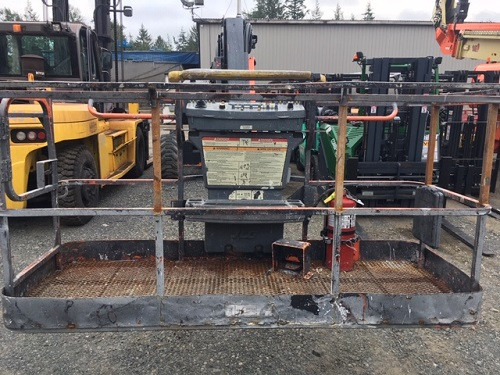
Genie: Used Genie Man Lifts Spokane - Genie rough terrain and electric scissor lifts lead the industry in creating work site effectiveness and maximizing production. Genie units can fit through standard sized doorways and are able to maneuver in tight, small work areas. Non-marking, strong tires are always standard. They are always updated with innovative and new features and options to help you and your company be a lot more effective. When it comes to all tasks, big and small, Genie's rough terrain scissor lifts move smoothly and efficiently thanks to its excellent traction, gradeability, and speed. When platform workspace is required Genie machines are ideal. They could operate in confined spaces allowing for more work space, more staff, and more space for larger cargo. Updated, new features on the Genie slab scissor lifts have helped improve not only the performance but also the reliability and serviceability of these equipment. Able to work outdoors and indoors, Genie's self-propelled electric scissor lifts are perfect for applications on solid, level surfaces. These models create less noise compared to numerous other machinery and have generous capacity and allow for large platform workspace. These types of lifts are ideal for jobs ranging from construction to installation to maintenance jobs. Genie models have been equipped with easily accessed diagnostics on-board to help workers solve problems on the go. Operators could troubleshoot and make adjustments with minimum equipment downtime. For easier access to the engine and servicing, units are outfitted with swing-out battery boxes and power module trays.
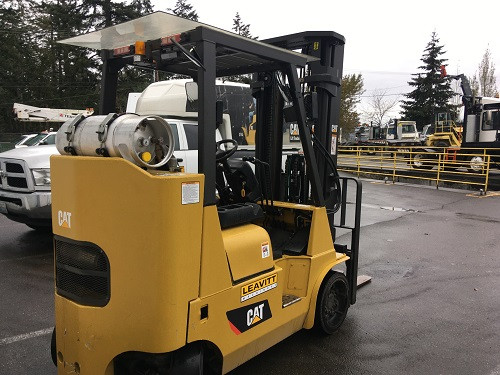
Caterpillar: Used Caterpillar Loaded Container Handlers Spokane - Internal combustion counterbalanced lift trucks Gasoline, liquid propane, compressed natural gas or diesel can be used to power an internal combustion engine truck. Diesel- or gasoline-powered lift trucks are normally large trucks meant for outdoor use. They either have pneumatic tires appropriate for driving on rough terrain and steep inclines, or cushion tires made of solid rubber suited to driving on floors indoors. The ITA categorizes internal combustion counterbalanced lift trucks with cushion tires as Class 4 trucks. Class 5 are trucks which have pneumatic tires. Usually utilized to power indoor lift trucks is liquid propane. These types of trucks have several advantages. They are able to provide consistent power during operation and are capable of achieving higher speeds. They don't have to be refueled as often as lift trucks powered by other sources. Propane cylinders can be kept anywhere because they don't take up much space. The cylinders could be easily switched out by a skilled operator. Internal combustion trucks are easily refueled and this is its benefit. The drawbacks are too much noise and air-pollution.
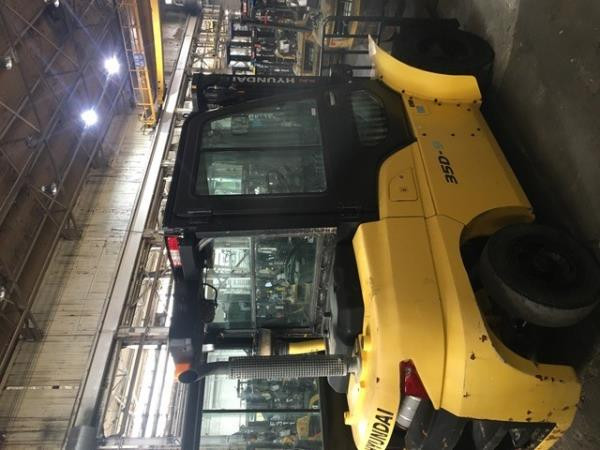
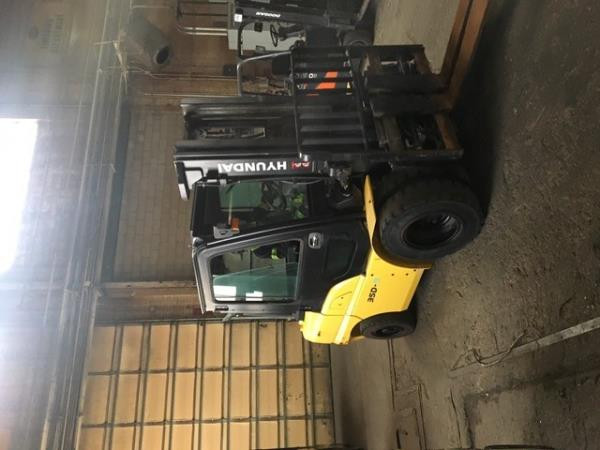
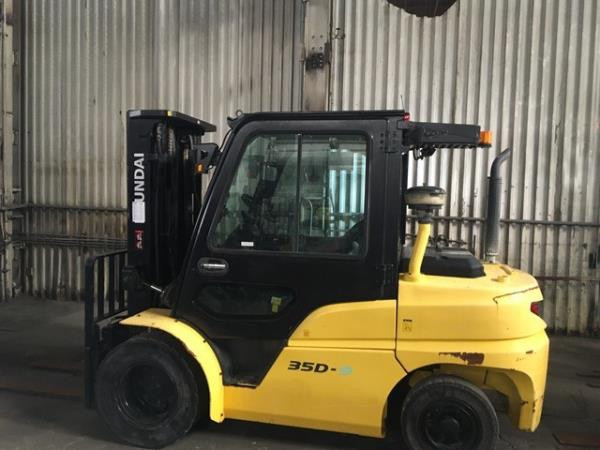
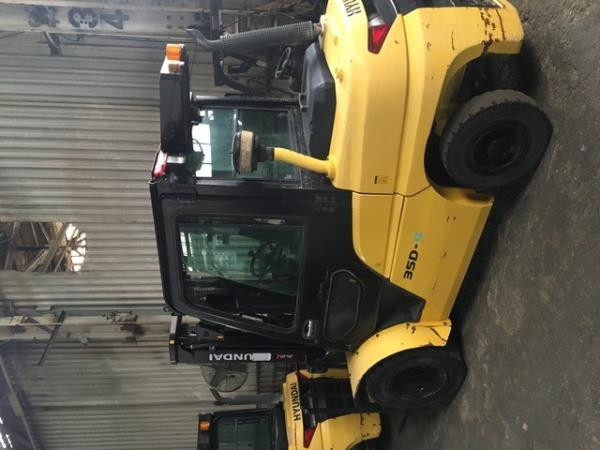
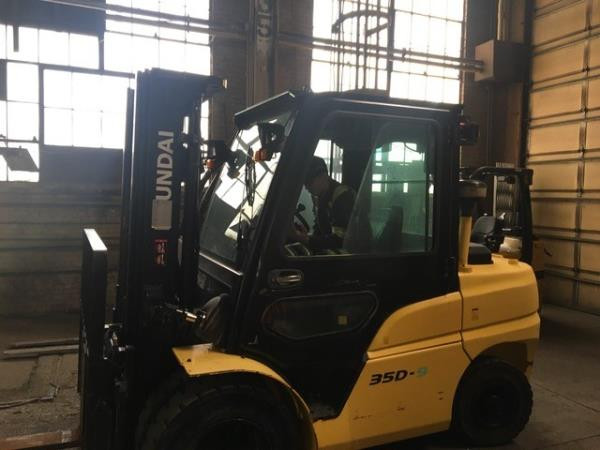
Hyundai: Used Hyundai Diesel Forklifts Spokane - Hyundai Diesel Forklift Trucks Offering an economic and efficient alternative that could suit your material handling requirements, whether for outdoor or indoor application, is the complete series of Hyundai Diesel Forklifts. The Hyundai Diesel Powered Internal Combustion forklift is manufactured up to 16 tons. This particular model is non-explosive making it the best alternative for enduring maximum safety in mining operations and flameproof for chemical setting. It also works really well in tropical and warmer, humid weather conditions. Regardless of where you want to operate and what kind of setting you will be working in, there is a Hyundai forklift available suitable for your specific application. Features and Advantages of the Hyundai Diesel Forklift Include: Several of the main benefits and features of the Hyundai Diesel Forklift consist of the strong overhead guard responsible for protecting the operator during dangerous tasks, the aluminum radiator for amazing heat protection and the key locking fuel cap. Moreover, the model provides an electronic monitored air filter that alerts the operator before any major damage occurring and increased fuel tank capacity for less down time. Last of all, the highly visible brake fluid reservoir is available for faster daily inspections. Definition of Forklift In the early part of the 1900s, the very first forklift was invented. It is a type of vehicle utilized in heavy industry responsible for moving and lifting objects. The design of the forklift has been diversified since its creation and today, different businesses manufacture this versatile machine. The market is competitive and there are many used models available as well. The majority of heavy equipment rental companies carry an array of various sizes and models. Motors are utilized to power forklifts. It has an attached platform that is outfitted with prongs that could be raised and lowered. The platform is able to be inserted underneath an object and then raised by controls to move the object. These kinds of machines are useful in numerous industries from mining, heavy construction, shipping and receiving, retail stores, long term storage facilities to general and industrial warehousing.
Skytrak: Used Skytrak Zoom Boom Spokane - There are 5 models ranging in lift height, range capacity and reach capacity. Day after day you would be attaining new goals and turning corners on job performance. These kinds of equipment will keep working job after job, even in rough terrain and the most challenging environments. With 3 steering modes, you will have all you need to handle all the maneuverability to handle varied and challenging terrain. When you need to take productivity levels to the next level the Model 10054 provides 4-wheel drive and 4-wheel steer to be able to successfully accomplish the tasks that require the most mobility. Stabil-Trak System WIth the patented Stabil-Trak system in place, operator confidence is enhanced. The Stabil-Trak technology will offer rear axle stabilization that enables the automatic transfer from a 3-point stance to a 4-point stance in order to enhance stability. The system operates in free-pivot and final positioning locked modes. With both the effectiveness and power of Stabil-Trak technology working with you, you would see more operator confidence and a superior level of boosted performance on the jobsite. The Stabil-Trak system along with the axle mounted outriggers operate to allow the frame to become both level and secure without changing the stance. The Right Dimensions SkyTrak Zoom Booms will provide an overall height of up to 101 inches on some models, in addition to a ground clearance of as much as eighteen inches. This would enable the operator to have better access to areas of low-clearance and more room to travel over debris. The navigation of confined areas is a lot less challenging with the tight turning radii. These are only several of the features that allow you to maneuver your way through the most productive day you could. Firestone Tires Truly Last Longer Firestone DuraForce MH tires exclusively equip the SkyTrak telehandlers. These new Firestone tires reduce your cost of ownership because they last 3 times longer as opposed to the Firestone SGG telehandler tires and are less susceptible to sidewall damage. Since these kinds of tires are available in different unique sizes, there are less components to store. This results in an overall decrease of inventory expenses. In order to maximize performance in rough terrain, lesser ground bearing pressure is offered by a self-cleaning tread pattern. Much attention to detail has been put the overall design and engineering of each and every SkyTrak machinery. From the cab interior, to the tires, to the frame, a strict attention to detail has allowed these types of equipment to be made in the most economical way for the machinery to be built and provides the operators with the most dependable choice for the jobsite.
Taylor: Used Taylor Used Forklifts Spokane - Taylor Machine Works is a full line of heavy duty forklift trucks, specialty machinery, container handlers and machinery which continues to lead the industry because of their emphasis on dependability, support and ruggedness. For more than 80 years now, Taylor has been bringing their credo of faith, work and vision to the Heavy-duty lift machinery all around the globe. Taylor holds their customers close. They think that a satisfied client is one who gets to enjoy the benefits of the complete range of user experience. Initially, their products were engineered and made to standards which meet just the most demanding business conditions. Only the strongest and best available materials and vendor items are chosen in order to make certain that all their machinery will effectively meet all your requirements every day for numerous years to come. Taylor has established among the best reputations within the industry with a lot of of their machines usually found at the tops of the lists in the resale market. Even if they might not be the lowest priced machinery on the market, customers know that brand new or second-hand, a Taylor equipment is strong, reliable and ready to handle all your requirements. The forklifts made by Taylor are build with excellent craftsmanship using top of the line technologies and quality components. When you purchase Taylor, you receive high productivity, lower operating expenses, easy serviceability and maintenance, in addition to unsurpassed aftermarket support. All these factors contribute to these lift trucks commanding the highest resale value in the material handling business. Taylor is popular for their "Big Red" equipment. These models are tough on the job no matter what environment in the globe they are being used in. These equipment are large and work frequently in such diverse applications and industries including: Intermodal, Steel Mills, Industrial and Contracting Rigging, Lumber, Heavy Metals, Aluminum Mills, Concrete Pine and Precast, Mining, Forgings and Ship Building and Foundries. The workers at Taylor is all committed to helping you make the right choice when determining what type of model would be perfect for your specific needs. Be certain not to hesitate to contact your local Taylor dealer when you are in the market for a second-hand or brand new forklift. Furthermore, different rental options may be a suitable and affordable way to help make such a big choice for your company. The parts and service team is highly efficient and knowledgeable, striving to ensure you experience as little down time as possible.
Daewoo: Used Daewoo LP Forklifts Spokane - How to Read a Forklift Propane or LP Bottle Gauge Forklift drivers must know some safety factors when figuring out how to read a forklift propane bottle gauge. Operators must know when the forklift is running low on propane or fuel. Some types of forklifts which are older are designed so that the forks lower slowly to the ground and the equipment shuts off automatically when the vehicle runs out of fuel. This is very unsafe and could lead to personal injury and product damage. Newer kinds of forklifts are designed differently to avoid this from happening. The operator could use a handle that stops the forks from falling when the propane runs out. 1 Make sure you know where the propane gauge is located. Forklift propane gauge are a lot like an automobile's gas gauge. It is a small round object situated either on the propane tank's valve or on the forklift dash where the rest of the gauges and controls are situated. 2 Always keep the cover of the gauge clean so that the lines and letters behind the glass are legible. 3 Located at the bottom of the gauge is the indicator needle. This needle will show you how much fuel is still in the propane tank. 4 There are two letters on the gauge: E for empty and F for full. When the needle arm points at the letter E, it will mean that the propane tank is totally empty. When the needle arm arrives at the letter F, it would mean that the propane tank is totally full. 5 Notice the line in the middle of the gauge. When the needle arrives at the middle line it means that the tank is half full of propane. 6 Typically, there are smaller lines midway between the middle lines. These lines mean quarters. When the needle points at the quarter mark nearest the F, it means there is three-fourths of a tank remaining. When the needle touches the quarter mark closest to E, the tank is one-fourth full.
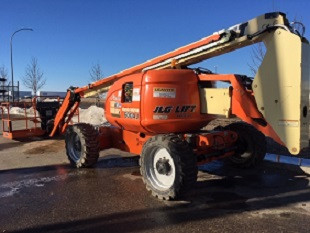
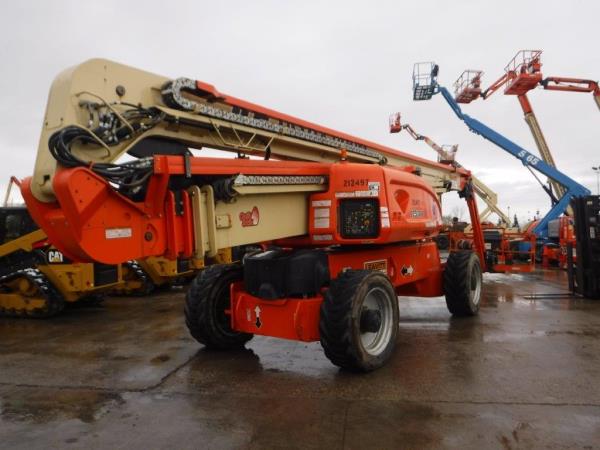
Haulotte: Used Haulotte Articulating Man Lifts Spokane - Kinds of Articulating Man Lifts Man lifts are offered in a variety of engine-powered and electric powered models, which depends upon the industry and the function. These reliable machines can be utilized for various jobs and applications. Like for example there are outdoor lifts which are capable of rising over 140 feet and offer a horizontal extension of 69 feet. Furthermore, there are smaller types of man lifts which can extend 21 feet horizontally and extend 36 feet. Electric powered man lifts are generally utilized on concrete slabs indoors. These machinery tend to have slim body designs that enable them to work in narrow areas. Typically, engine-powered man lifts are generally used for outdoor applications and operate on gas, propane and diesel. Electric Man Lifts Because they do not give any pollution and come in small enough sizes to maneuver around barriers and blockages and fit through standard-sized doorways, electric man lifts are an ideal alternative for indoor applications. These models are capable of easily maneuvering and fitting into tight areas. They are capable of reaching overhead work areas. Certain electric lifts have a rotating platform that is particularly for targeted maneuvers and offers precise abilities. The lift controls have been designed for accurate maneuverability and efficiency. The electric lifts are offered in a lot of sizes for using in places with high ceilings and in small warehouses or similar environments. The electric drive is capable of operating on rechargeable batteries that are usually recharged overnight and afterward can be used in the morning. Engine-powered articulating lifts have been designed for numerous types of terrain. Several kinds of these lifts are fitted with legs which could lift the body of the lift off of its wheels in order to create a highly stable platform. Other articulating lifts have been designed to be utilized on rough and uneven ground.
Carelift: Used Carelift Telescopic Handlers Spokane - The Carriage Similar to conventional forklifts, the lifting attachment is able t be tilted from its horizontal position to forwards and backwards. The actual amount of tilt possible completely exceeds that of vertical mast lift trucks. There are different kinds of available lifting attachments, and this positioning ability makes them as efficient as possible. Most telehandlers can tilt forward to a point where the carriage is actually parallel with the ground believe it or not! In addition, numerous units offer rotating carriages too. This allows the operator to adjust the lifting attachment radially. This translates to the load being capable of being tilted backwards and forwards, as well as side to side. Load Capacity Knowing the load capacity of a telehandler is a much different exercise than it is on a vertical mast unit. The capacity of the model is completely dependent on such things like: boom extension and angle, whether the unit is lifting on outriggers or on rubber tires, and the amount of boom transaction deployed, if this is applicable. Moreover, which lifting attachment plays a really important role, as does the wind, the grade the machine is operating on and so on. All of these specifics can be changing constantly and this gives the operator a lot more information to take into consideration. Telehandlers would often have several different load charts available to them, giving them a good reference they can utilize to know a certain lift's load capacity. Depending upon the model in particular and the configuration of the boom, the load capacity may differ by thousands of pounds all together.
Yale: Used Yale Propane Forklifts Spokane - Narrow aisle lift trucks work by increasing the ratio of the storage space to the aisle width. Yale spotlights the single reach NR and the double reach NDR units for aisle widths of eight to ten feet. The Narrow Aisle trucks made by Yale provide a Quadra-Flexx Operator Compartment which has various stance and control handle configurations and use best-in-class ergonomics. NR & NDR Productivity Enhancements Quadra-Flexx Operator Compartment: There are many control handle configurations that meet a variety of operations as well as a choice of fore and aft stance or side-stance options too. AC Motor Technology: This technology offers powerful acceleration and deceleration as well as fast lifting speeds. It has been made for quick plugging so as to facilitate more responsive directional changes which combine to increase the amount of loads moved in a shift. Mast & Reach Assembly: The trunion mounting and tapered roller bearings are part of the mast reach assembly. This increases the durability and rigidity of the mast; along with the gusseted rear frame weldment, and the reach assembly carriage which are reinforced for long life. Power Lowering: Yale provides industry leading lowering speeds and these uploaded speeds really enhance the overall throughput and productivity. Regenerative Lowering: While regenerative lowering can reduce battery changes per shift it also functions to maintain a lower oil operating temperature. Electronic Steering: The electronic steering eliminates the need for hydraulic pumps and thus greatly reduces energy. The operator could adjust the steering tiller and the steer effort is actually technician adjustable in order to lessen operator exhaustion. During the start-up process, drive tire centers automatically start. Order Selectors: Order pickers are also called very narrow aisle trucks and the narrow aisle trucks. These machines are designed for the manual handling of racked loads that are smaller than pallet size. These order selectors lift both the operator and the load to its required height. This height can be over 30 feet. Like the majority of turret trucks they are usually rail or wire guided when used in very narrow aisle applications.
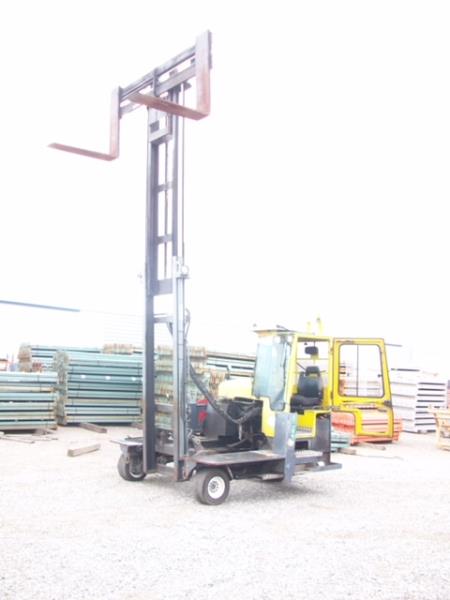
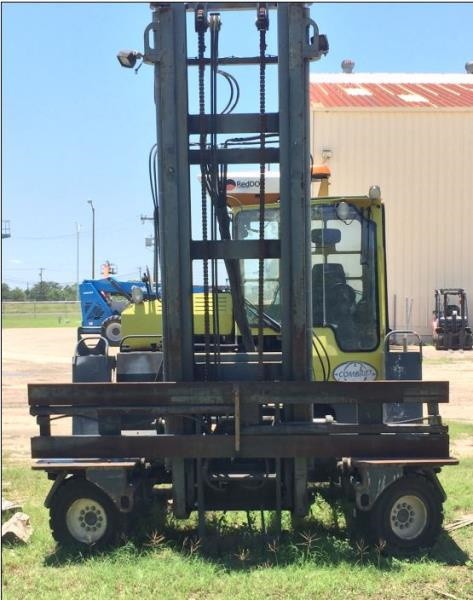
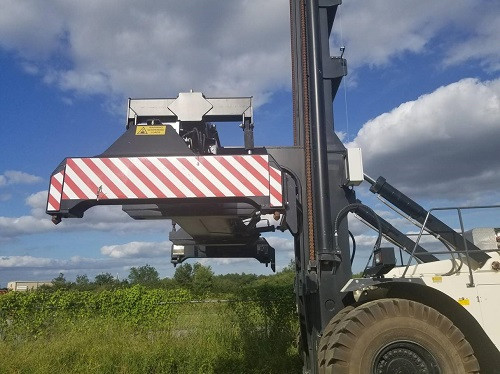
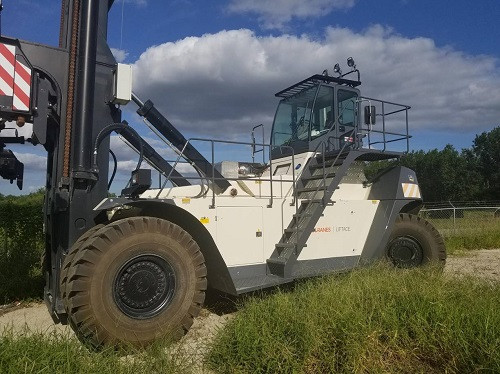
Terex: Used Terex Loaded Container Handlers Spokane - Terex's Port Crane division offers experience and unrivaled heritage. This is because of the combination of 2 of the world's best Port Crane builders. The combination of two of the world's leading Port Crane builders gives the Terex Port Crane division unrivaled heritage and experience. Offering over a century of practice within the manufacture of Port Crane's, the Reggiane Crane Division offers a large and loyal worldwide client base as evidence of their accomplishment. During the year 1824, the Fantuzzi Noell Crane Division was initially formed in Wurzburg Germany. After successfully having more than 40 years in the manufacture and production of Straddle Carriers, the Fantuzzi Noell Crane Division is still the top supplier in the world these days. Advantages of Terex Port Cranes: Terex's Port Cranes offer numerous important advantages like: unrivaled experience, dependability, excellent build quality and robustness. Straddle Carriers are truly ideal for flexible and mobile container stacking. Ship to shore cranes provide superior productivity in the on-loading and off-loading from medium to large container vessels. The Rubber Tire Gantry Cranes are ideal for meeting high selectivity requirements and intensive container stacking. Mobile Harbour Cranes are really suited for the bulk handling of containers and for ports with high mobility requirement. Side Loader Light Range The side loaders in the light range models are units from 3 tons to 4 tons. These models could be made in diesel, LPG or electric units. These models are made with a standard deck height of 800 mm and the standard height of 4.5 m mast, with no loss of capacity. These units feature a fully heated cabin, a formed chassis for extraordinary strength and joystick control. These machines they have are the products of the major experience of the business. Side Loader Medium Range The 5 ton and 6 ton versions come powered by diesel, LPG or electric. Every unit come designed with a 4.5 m mast, deck height of 1000 mm, and no loss of capacity experience. What's more, they offer joystick control, a fully heated cabin and a formed chassis for extraordinary strength. The company depends on their numerous years of experience to get these products out to meet their customer's expectations. Side Loaders Heavy Range Terex's line of heavy range side loaders are amongst the best within the field. The unit's shape and size can be customized to adapt to your requirements. Regardless of whether you are handling steel plate, concrete sections, coils or something exclusive, Terex has the capacity to design a model around your particular requirements. For example, chassis widths, deck widths, heat protection, engine type, cab position, tires and type of transmission could all be adjusted to suit your requirements.
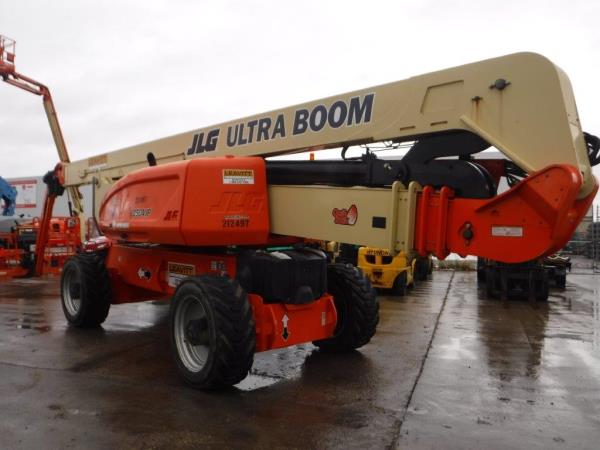
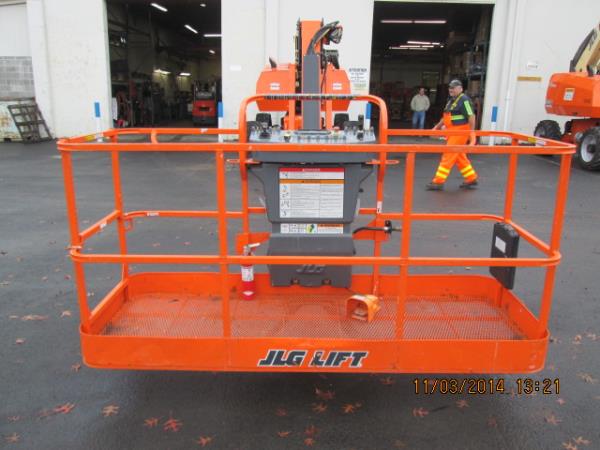
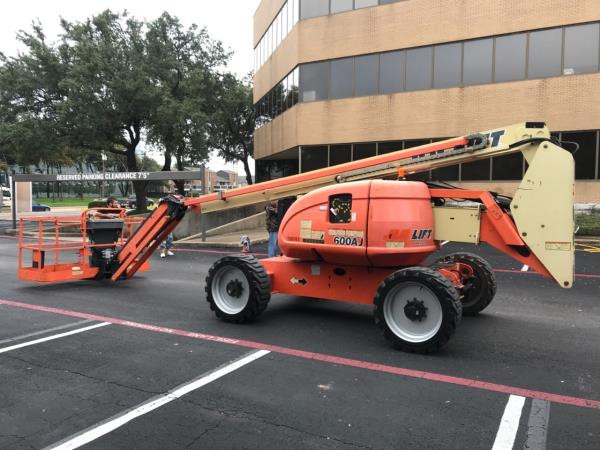
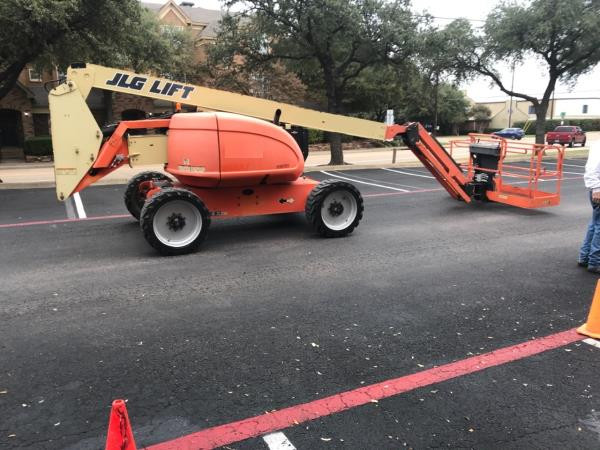
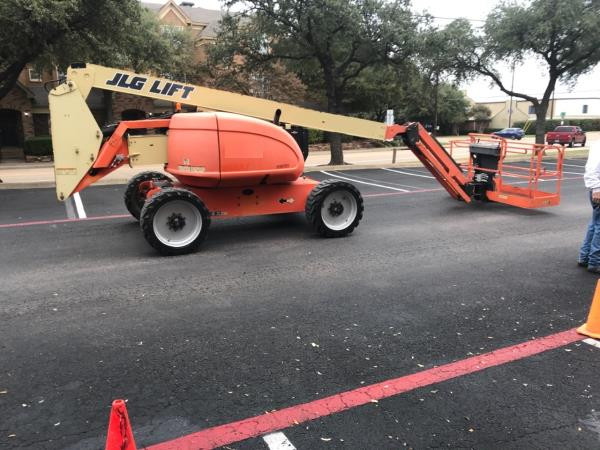
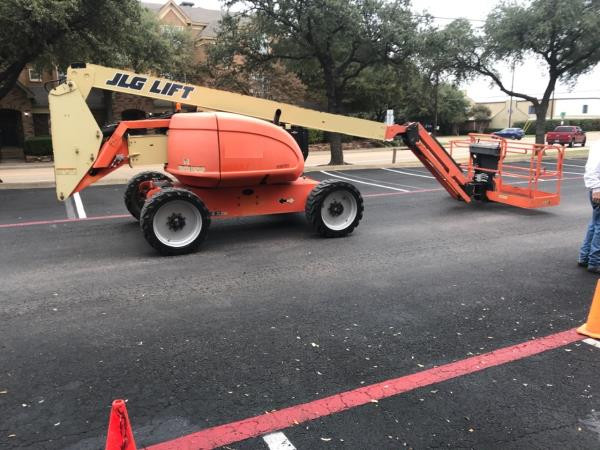
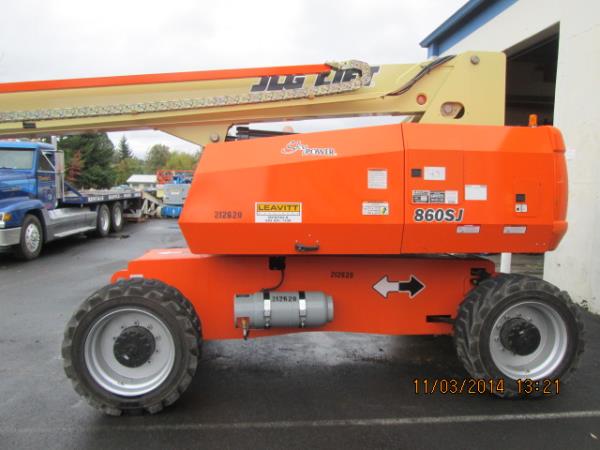
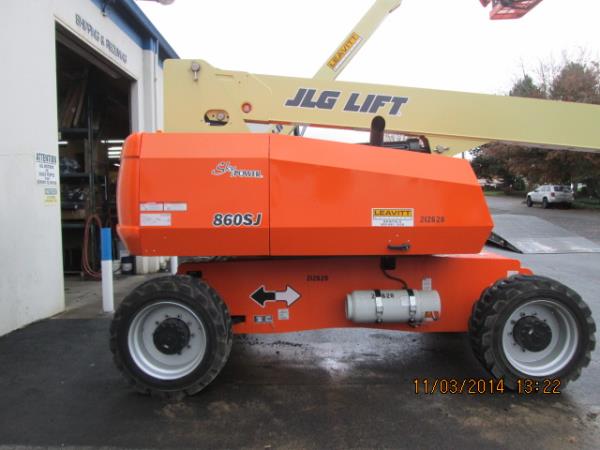
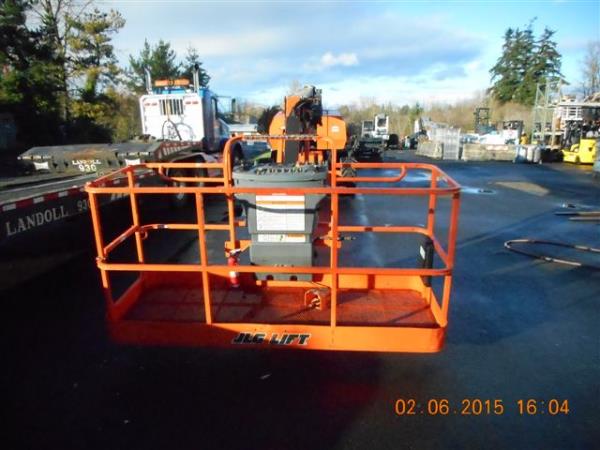
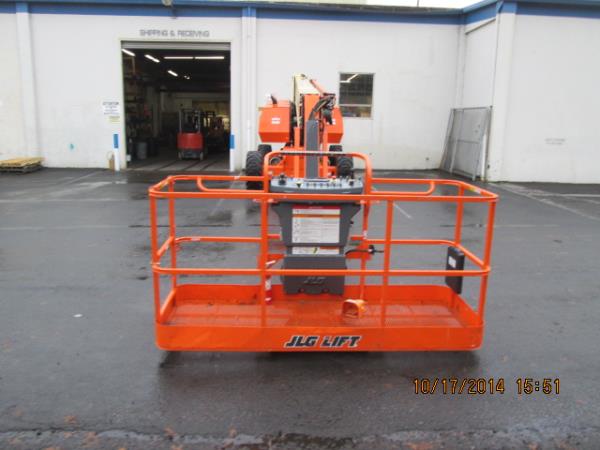
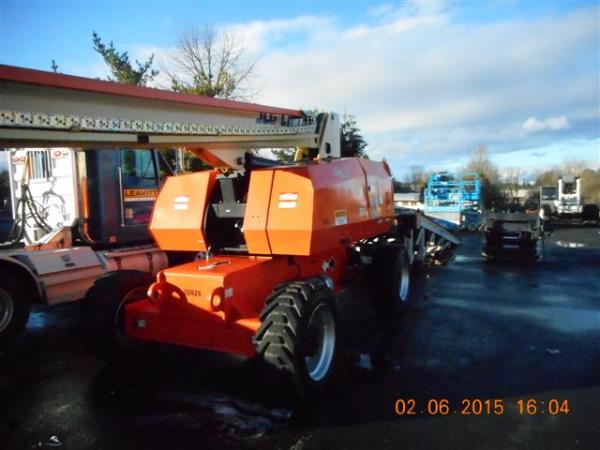
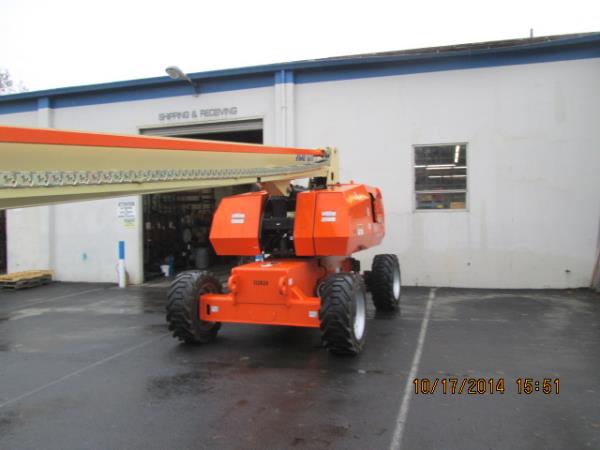
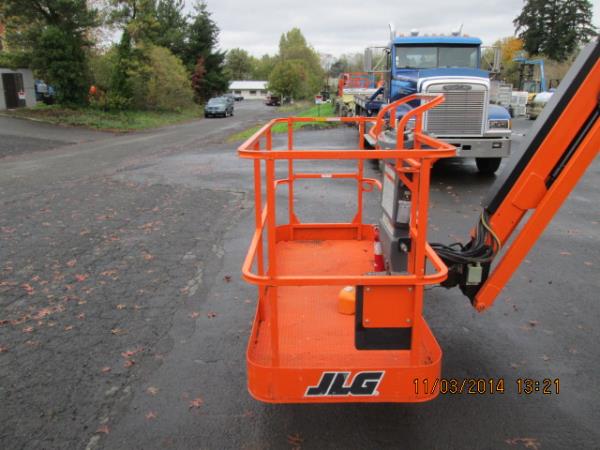
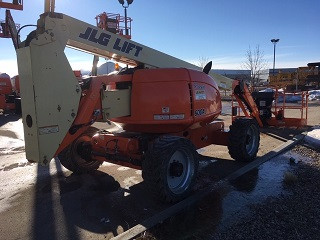
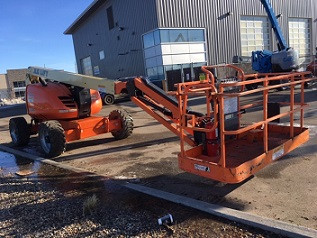
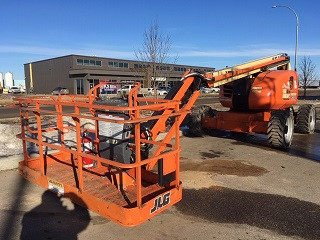
JLG: Used JLG Man Lifts Spokane - JLG is a company completely determined to be at the forefront of the industry and have been one of the top providers in the world for access equipment. Our Vision We continue to strive and offer world-class service, excellence and quality in all of our models through a lot of devotion, great leadership and teamwork. JLG delivers excellent machinery to our diverse clients across the globe. Our company offer exceptional quality not only to our customers but all our distributors as well. JLG takes pride in offering enrichment and opportunity for all our workers. We also showcase exceptional performance when it comes to our shareholders. Our Values JLG tries to continue our vision and our objective to providing the best in all aspects of our business. We continue to follow these core values every year. Customer Focus Our ability to understand and respond to our customer's requirements, our company recognizes that we have to be leaders within the industry. We concentrate on establishing a solid partnership culture that supports constant 2-way dialogue in order to openly communicate. Each and every time we have contact with a client, we feel it is another opportunity to enhance the merits of JLG and know their requirements and deliver. Highest Quality Standards When it comes to quality and service, we fully expect our customers to provide us with the feedback which we are in fact number 1. We feel that excellence would be attained by not only meeting but exceeding all our customer's requirements with every service and equipment offered by JLG. We work with the particular goal of providing defect-free machines on time, each and every time. World Class Products In meeting clients' needs all over the world, JLG provides a huge array of equipment that demonstrates the highest performance and best overall price value. We continue to introduce items which anticipate or address new opportunities in all of the markets that we serve. Uncompromising Integrity At JLG, we believe in conducting ourselves with a high degree of principles. We wish to be sensitive to the requirements of our customers, employees, all our shareholders and all our suppliers as well. We strive to be good citizens within the communities that we work in. Constant Pursuit of Excellence At JLG, there is no norm. We take pride in our desire to constantly challenge the way we do things and continually ask questions. We want to promote flexibility, innovation, and responsiveness that would keep us focused on quality in all aspects. Teamwork JLG believes in reaching higher levels of accomplishment just by ensuring a team environment that builds a group commitment and individual self-confidence. This positive environment encourages each and every one connected with JLG to offer positive ideas so as to maintain our constant pursuit of quality.
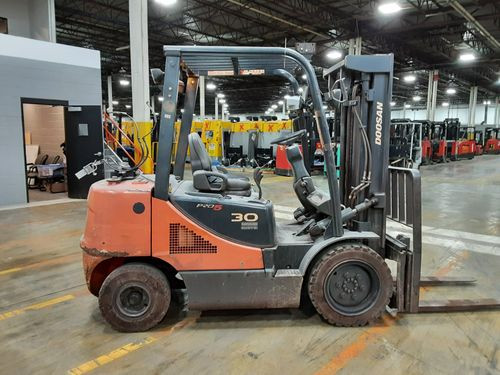
Clark: Used Clark Diesel Forklifts Spokane - Diesel Forklifts Vs. Electric Forklifts A forklift can be powered either by internal combustion (IC) motor or by an electric motor. Electric forklifts are best for indoor use and cost a lot less to use. IC machines are suitable for use outdoors and are faster to refuel. Electric Forklifts For indoor use, where the quality of air is a problem, the electric forklift is the suitable machinery you can use as it produces no exhaust. Electric forklifts are not noisy and clean. They are 20% to 40% more expensive to purchase than IC lifts, but the per-hour operating cost of electric models is much less. The downside is that batteries require 16 hours to charge and cool down, so purchasing an extra set of batteries is suggested. Electric lifts are not limited for use indoors, but when utilized outdoors they must be utilized carefully. Diesel Forklifts Internal Combustion forklifts have a higher carrying capacity than electric forklifts and are commonly utilized for outdoor applications. If your fleet normally operates on one kind of fuel, it might be a good idea to buy an IC unit which utilizes the same kind of fuel. They could run on diesel, gas or propane. Diesel is the most economical. IC forklifts have the advantage of being easy to refuel and less expensive to operate; however, their per-hour cost to operate is higher. The majority of IC models cannot be utilized indoors. Other Forklifts In warehouses where there are tight spaces, the narrow aisle electric forklift is most suitable. They are constructed to pick up loads without having to position the lift facing the stacks. Rough terrain diesel forklifts have huge tires for running on hard surfaces.
LE Series: Used LE Series Scissor Lift Spokane - Electric Scissor Lifts The newest electric scissor lifts, the RS Series feature passive pothole protection and are extremely rugged. These models can traverse grades of up to 25 percent and provide industry-leading duty cycles. The ES Series is quite similar to the RS Series, though it has a lot more available units. Also, the ES Series offers the electrical vertical mast lift. These machinery feature less scheduled service requirements and you will benefit from longer runtime. Standard on all LE Series scissor lifts are features such as 35% gradeability, available all-wheel drive, a standard oscillating axle and rugged-all terrain tires. These models will allow you to go from rugged terrain to slab and back again easily. RS Series Scissor Lifts The RS Series is used a lot any place where there is work which has to be done. For example, these equipment are commonplace in office buildings, hospitals, schools and in any kind of commercial construction application. The RS Series is intentionally engineered to be really durable and strong. These models offer you uncompromised performance and outstanding quality for exceptional value. ES Series Scissor Lift There is a lot do in your workday each day that you require equipment which stays with you and performs each day. JLG has engineered the ES Series scissor lifts to perform the most exceptional on-the-job performance and become the best in the industry. These models perform with double the duty cycles of different other electric scissor lifts, enabling you to have double the operating time on one charge. The Workstation in the Sky accessory line could help you keep all of your equipment and supplies close at hand while adding to your production. LE Series Scissor Lift Regardless if you require a scissor lift that is both rugged and environmentally friendly, look no further than the entire series of the LE Series scissor lifts from JLG. These units feature a standard oscillating axle, exceptional off-slab performance, and full-time automatic traction control and all-terrain tires. The LE Series of scissor lifts works as hard as you do for the entire day in even the harshest environments. In order to find out which machinery will suit you the best, go to your local JLG representatives and they could be able to help you with your specific requirements. The dealers would help you determine what kind of features would be most utilized depending on your particular work surrounding and which elements are most vital.